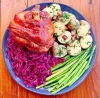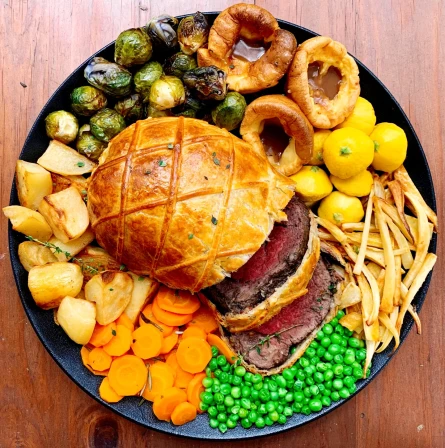
Sunday roast beef Wellington with all the trimmings (The United Kingdom)

The Sunday roast lunch is a cherished British tradition that originated as a family meal enjoyed after church on Sundays. So beloved is this ritual that in a poll of what Britons love most about their country, the Sunday roast ranked second—outranking icons like Shakespeare, The Queen, The Beatles, and even Harry Potter!

Traditionally, the roast could feature lamb, pork, chicken, duck, goose, or turkey, with each meat paired with classic accompaniments—apple sauce for pork, mint sauce for lamb, or sausage and sage stuffing for chicken. For my feast, I chose one of the most lavish British roasts: beef Wellington, often served alongside Yorkshire puddings.

Despite its fame, the origins of beef Wellington remain somewhat mysterious, with no definitive link to the Duke of Wellington, who lent his name to the famous Wellington boots. The dish emerged in recipes as late as the early 1900s and is widely believed to be a patriotic British twist on French culinary techniques, blending the nation’s love of pastry-enclosed meats with a dash of nationalism.

Preparing beef Wellington involves searing a whole fillet, spreading it with a mushroom paste called duxelles, layering on ham or pancetta, and then wrapping it all in pastry. It’s baked until the crust is golden and flaky while the beef inside remains tender, juicy, and medium rare. This foolproof method ensures the expensive cut stays moist while adding layers of luxurious flavor and texture.

To complement the Wellington, I roasted potatoes, parsnips, and Brussels sprouts in duck fat—the only true way to roast vegetables—then steamed carrots and peas for color and balance.

Yorkshire puddings, which I had never attempted before, proved fascinating. Traditionally, they’re made using the molten fat drippings from the roast, heated until smoking in muffin tins. A simple batter of eggs, milk, flour, and salt is poured into these hot wells and baked until puffed and golden, with perfect indentations in the center. The result is a light, fluffy creation somewhere between a bread roll, a quiche, and a savory custard—ideal for cradling generous ladles of gravy.

Speaking of gravy—arguably the most crucial element of a roast dinner—I hold a near-religious reverence for it. I’ve been close to tears over poor or missing gravy in past meals. Thankfully, my gravy was a triumph. My secret: start with the pan drippings, whisk in plain flour over low heat until smooth, then gradually add meat stock, ensuring a silky texture before adding more. I finished with a splash of red wine and a generous grind of pepper to deepen the flavor.

In keeping with tradition, I shared this roast with my Mum and Dad on Sunday lunch, and then enjoyed the leftovers for much of the week—a testament to the hearty, satisfying nature of this quintessentially British meal.

Shrimp ‘n’ grits and devilled eggs (Southern USA)

Grits, a ground corn porridge akin to polenta or mieliepap, are typically enjoyed with savory seasonings and sides. Despite my knack for sourcing local ingredients, I was surprised to find grits elusive in Brisbane. This culinary quest led me to my first-ever online grocery order, sourcing grits  […]

Continue reading

Maple salmon, wild rice and vegetables (Canada)

This meal may not fit the classic Canadian food stereotype, but it’s deeply rooted in Canadian ingredients and traditions. Salmon, a cherished native fish, holds a special place in Canadian cuisine—enjoyed fresh during spawning season or preserved as jerky to be savored year-round. When I think of  […]

Continue reading

Stekt fisk, agurksalat, lefse and vegetables (Norway)

Stekt fisk, which simply means “fried fish,” is a beloved Norwegian classic featuring white fish like cod. The fish is lightly dusted with seasoned flour and pan-fried in a bit of oil until golden and crispy. It’s straightforward but utterly satisfying. Agurksalat, or cucumber salad, might seem like  […]

Continue reading

Snert and/or erwtensoep (Netherland)

I included both dish names in the title because, despite my best efforts, I’m still unclear on whether there’s a real difference between them. From what I’ve gathered, both refer to a hearty pea soup popular in the winter months, but with a class twist: snert is the rustic, humble version made by  […]

Continue reading

Fondue (Switzerland)

Fondue and raclette are iconic Swiss dishes that celebrate cheese in all its glory. This week, my appetite could only manage one, so I went with fondue—though raclet  […]

Continue reading

Tapas (Spain)

The word “tapa” originally meant “cover” or “lid,” and how it came to describe an assortment of small dishes served with drinks is a story wrapped in mystery. One popular tale suggests that bar patrons’ drinks—especially sweet sherry—were covered with a small plate or slice of food to keep pesky  […]

Continue reading

Feijoada (Brazil)

Feijoada is widely celebrated as Brazil’s national dish, and during my visit, I found it featured everywhere—from humble eateries to upscale restaurants. Though similar bean s  […]

Continue reading

Southern BBQ (Southern USA)

Deep-pit barbecuing, with its roots in Native American tradition, involves cooking meat and vegetables buried beneath hot coals underground—a technique still cherished across the southern United States. Today, this method often takes the form of above-ground smokers, where meats cook low and slow  […]

Continue reading

Mango, prawn and avo salad (Australia)

  In Australia, summer demands light, refreshing meals that offer relief from the relentless heat, and salads reign supreme during this season. My family, in particular, embraces this culinary tradition wholeheartedly. The thought of turning on the stove when the temperature soars is simply  […]

Continue reading

Page top