
Deep-pit barbecuing, with its roots in Native American tradition, involves cooking meat and vegetables buried beneath hot coals underground—a technique still cherished across the southern United States. Today, this method often takes the form of above-ground smokers, where meats cook low and slow over hardwood, soaking up rich, aromatic woodsmoke.
The heartland of American barbecue lies in 14 core states stretching from Texas to the Atlantic coast and up to Virginia. These states boast 70 of the nation’s top 100 barbecue joints, reflecting a fierce passion and competitive spirit over styles and flavors. Each region prides itself on unique dry rubs and sauces, ranging from mustard- and vinegar-based to light or heavy tomato sauces, with varying levels of sweetness and spice.
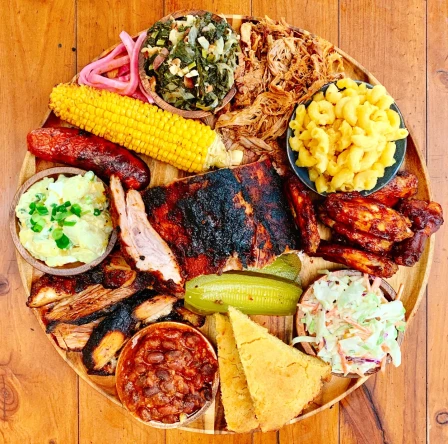
Popular barbecue meats include an array of pork and beef cuts—ribs, brisket (including the prized “burnt ends”), pulled pork, sausages—as well as chicken and fish. For my barbecue, working with a modest coal grill instead of a traditional pit, I prepared pork ribs, brisket, pulled pork, and chicken wings by slow-cooking them first with dry rubs of smoked paprika, cumin, mustard powder, onion and garlic powders, cayenne, and a touch of sugar. Once tender, I finished them over low heat on the grill, basting with mopping sauces crafted from tomato purée, butter, apple cider vinegar, Worcestershire sauce, and spices.
To celebrate the Native American influence on southern cuisine, I served barbecued corn and skillet cornbread—a golden mix of cornmeal, honey, baking soda, butter, and buttermilk. Classic sides included creamy potato salad, savory baked beans, tangy coleslaw (originating from the Dutch “koolsla,” or cabbage salad), and pickled red onions and cucumbers.
Collard greens, a staple throughout the year and especially on New Year’s Day with black-eyed peas and cornbread for good luck, rounded out the meal. These dark leafy greens, often cooked with smoked meat, onions, vinegar, and seasoning, provide a rich, earthy balance to the smoky meats.
And because no barbecue feast is truly complete without a touch of indulgence, I made classic mac and cheese—a dish with English origins famously embraced by the USA. Legend has it that Thomas Jefferson, enamored with macaroni during his European travels, tried to bring the dish home by commissioning pasta-making machines, ultimately resorting to importing macaroni and Parmesan cheese for state dinners.
My version of mac and cheese involved slightly undercooking the pasta, then mixing it into a creamy sauce made from butter, milk, and cream thickened with flour and breadcrumbs, and infused with sharp cheddar, Parmesan, and a hint of paprika. Baked until bubbling and golden on top, it was the perfect cheesy finale.
This meal embodies the quintessential American spirit of generosity and flavor—a rich, smoky, comforting celebration of technique, tradition, and delicious excess.
GET THE RECIPE