
The word “tapa” originally meant “cover” or “lid,” and how it came to describe an assortment of small dishes served with drinks is a story wrapped in mystery. One popular tale suggests that bar patrons’ drinks—especially sweet sherry—were covered with a small plate or slice of food to keep pesky flies away. Over time, these “covers” evolved into snacks enjoyed alongside the drinks.
Another legend credits King Alfonso XIII, who, while visiting a seaside tavern in Cádiz, ordered a glass of wine that arrived covered with a slice of ham to shield it from blowing sand. The King was so charmed that he requested another glass, also topped with a protective “cover.”
Alternatively, some believe that tapas began simply because many Spaniards couldn’t read or write, making menus impractical. Tavern owners would instead serve small samples on pot lids, allowing patrons to taste before ordering.
The tradition was further fueled by the salty nature of many tapas, which encourage thirst and keep the drinks flowing, while also lining the stomach to prevent rowdiness. Plus, since dinner in Spain is notoriously late—often after 9 pm—tapas fill the long gap between lunch and dinner, providing a perfect excuse to bar-hop with friends, sampling different specialties at each stop.
Tapas might come free with a drink, be ordered individually to create a meal, or expanded into a larger portion known as a ración. They’re often served with toothpicks, not just for convenience but also for hygienic sharing, leading to the alternate name pinchos or pintxos, meaning “skewers,” especially in northern Spain.
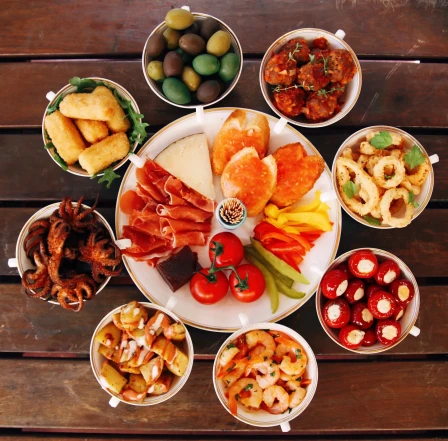
The variety of tapas is endless, but I prepared a selection of common favorites: mixed olives, albondigas (meatballs in a smoky tomato sauce), crispy battered calamares, cheese-stuffed peppers, garlic prawns (gambas al ajillo), patatas bravas with spicy tomato sauce, pulpo gallego (octopus with paprika), ham and cheese croquetas, jamón serrano, manchego cheese, tostadas topped with fresh tomato and garlic, and grilled capsicum, tomatoes, and quince paste.
Detailing every step would be exhausting—I still remember how much work it was! But the reward was incredible. One of my favorite things about eating is having a variety of flavors and textures to explore, and tapas truly reigns supreme in that regard. I adore tapas with all my heart, but next time, I might just let a restaurant handle the hard work!